


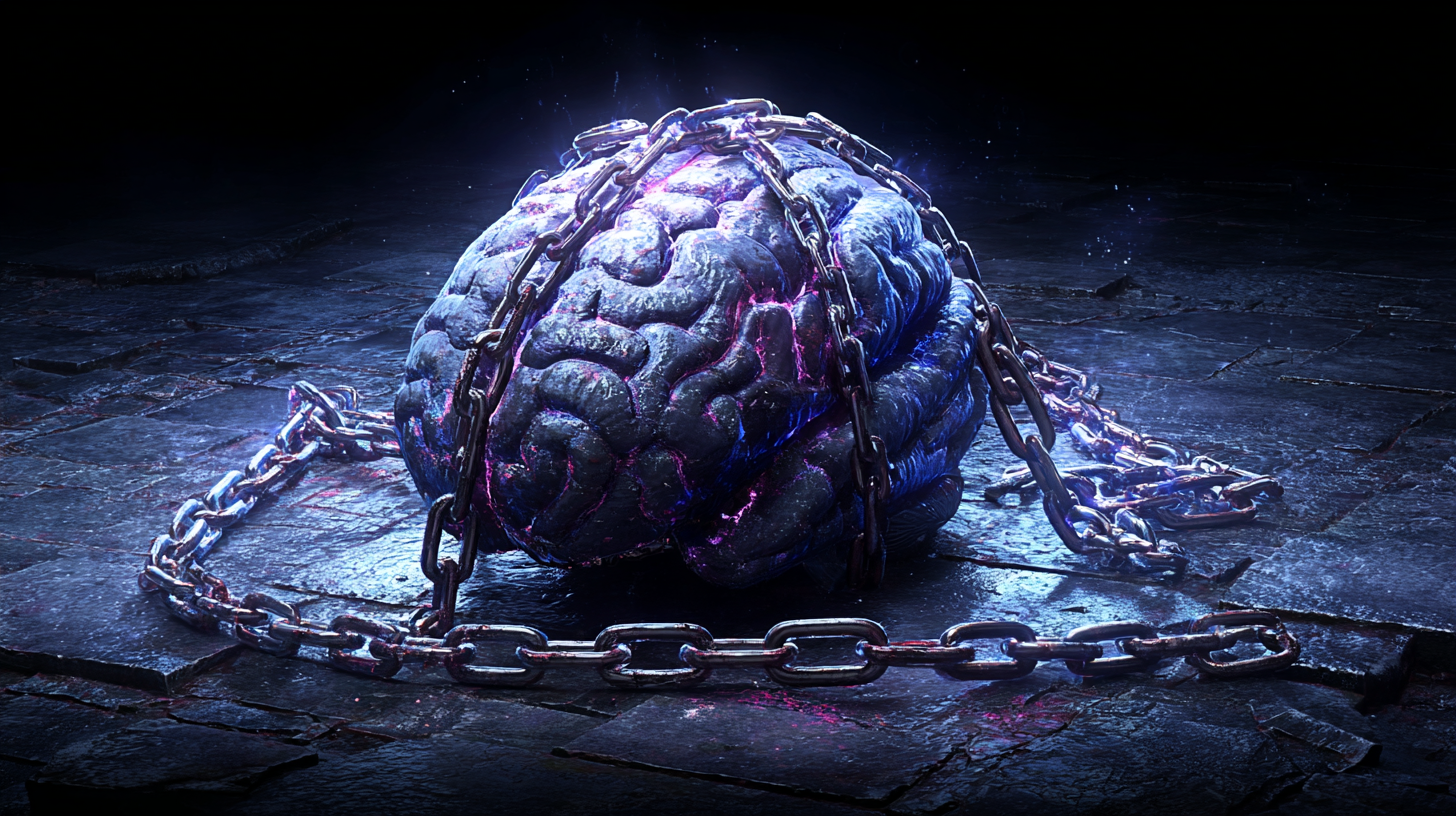
Why Hard Work Feels Impossible
Get The Latest Issue Of Neural Signals
Join 2800+ readers of the Neural Signals newsletter learning how their brain works (and how to use it better) every Saturday.
Technology (especially the social media apps on your phone) has programmed your brain to hate doing hard work.
People with PhDs in behavioral psychology spend months A/B testing how they can make their apps even more addictive.
The little red bubble on your app hits the same dopamine circuitry as a slot machine jackpot.
Push notification timing is specifically chosen for when your willpower is at its lowest.
Infinite scroll beat out paginated results by keeping people on the app 40% longer.
These people sit in conference rooms, look at the usage data, and ask “how can we increase the usage time even further?” The longer you spend on a platform, the more that company makes from ads. When something is “free”, you are the product.
Tristan Harris, former Google Design Ethicist, exposed how tech companies design these psychological triggers intentionally. This week, TikTok admitted (in court documents at least) that social media companies engineer their products to hook users. While you sit there mad at yourself for not being able to focus, someone was figuring out innovative new ways to break your focus.
I’ve been there.
I sat down at my desk. I stared at a blank document. I just needed to write 500 words about something I actually care about. But I couldn’t do it. I opened Instagram “just to check my messages.”
Cut to 3 hours later and I swiped through 200 videos about nothing but I wrote 0 words in the document.
Frustrated (and mentally exhausted), I closed the document, and promised myself that I’ll do better tomorrow. Except I wound up doing the same thing all over again. Eventually I started feeling like my brain wasn’t capable of hard work anymore.
Here’s the actual problem (and how to solve it):
The Dopamine Dealer in Your Pocket
Your brain runs a cost-benefit analysis on everything you do. 2015 research by Simpson & Balsam describes motivation as two components: direction (which goal to pursue) and vigor (how hard you go after it).
You have the direction (you know what to do) but lately you haven’t had the vigor (you can’t execute with intensity). It’s like you have a few quests but your stamina is at 10%.
Vigor is driven by dopamine signaling. When you use a social media app, your brain gets hit with rapid-fire dopamine spikes (new post, new comment, new like) every few seconds. When you work, you might get one hit after 2 hours when you finish a task.
Your brain’s cost-benefit calculator sees this equation and says: “Work costs mental effort and provides delayed, uncertain reward. Scrolling costs nothing and provides immediate, guaranteed reward.”
This constant stimulation triggers adaptation. When you flood your brain with dopamine constantly, it compensates by reducing receptor density. Addiction research calls this dopamine D2 receptor downregulation - your brain raises your “reward threshold,” the minimum dopamine hit required to trigger motivation.
Hard work can’t reach that threshold anymore... but scrolling does. That’s why you can scroll for 3 hours but can’t work for 15 minutes.
Your phone hijacks the same dopamine circuits as drugs like cocaine. Though the intensity is different, it’s the same wiring, downregulation pattern, and tolerance building.
When this happens, just like how someone with substance tolerance needs more of the drug to feel the same high, you need more dopamine hits to feel motivated to do anything. That’s why scrolling that used to be fun now feels empty. Your baseline keeps rising, the apps keep delivering more, and life (real work, real relationships, real achievement) keeps falling further below your reward threshold.
What This Feels Like
You’re sitting at your desk with a deadline screaming at you. The document is open. You know exactly what needs to be done. But your brain feels like it’s shrouded in fog.
So you check your phone “just for a second.”
Then, 3 hours later, you’ve still gotten nothing done. Every time you managed to close one app, you opened another one without thinking about it, while the task waits ignored.
It’s like you’re watching yourself fail in real-time. Your conscious mind is pissed at you, screaming at you to focus on the task. But your unconscious brain has ranked TikTok as more important than your work.
This is why you feel paralyzed. Your brain genuinely doesn’t calculate the work as worth the effort. It feels like trying to convince yourself to be excited about watching paint dry while someone’s offering you a free ice cold Coors Light every 8 seconds.
Then the guilt gets worse over time - especially at 11pm when the deadline is even closer, and you’ve made zero progress, but you’ve racked up 6 hours of screen time on your phone.
Your system has been rewired to treat scrolling like it’s more important than your actual priorities.
And you’re stuck watching it happen like a passenger in your own life.
Why Productivity Advice Makes It Worse
Every productivity method you’ve tried (Pomodoro, time blocking, habit stacking, atomic habits, deep work protocols) assumes your dopamine baseline is functional.
But if every time you try to work, you reach for your phone instead, your dopamine baseline is not functional. At least for now. We’ll talk about how to fix it in a moment.
It’s like trying to prepare for a marathon with a broken leg. It doesn’t matter how perfect the training plan is. When your dopamine system is fried, trying to “just do it” feels like you’re barely limping along. You can move a little, but until your leg heals, every inch is brutal.
Think back to the last time you tried this. You set up the perfect morning routine. Maybe it actually worked for a few days. You woke up early, took a cold shower, and did deep work.
Then, suddenly, things fall back off the rails.
It seems like everyone says the problem is discipline.
They tell you to try harder, but your brain literally cannot calculate “hard work” as worth doing.
They tell you to build discipline, but sometimes discipline alone isn’t enough to overcome neurobiology.
They tell you to block time on your calendar, but your neurochemistry will make you scroll during those times.
What really sucks is that each time you make the effort to try one of these things, and you fail, you feel even worse about yourself. This compounds the downward spiral because it programs your brain to expect failure even when you make extra effort to improve.
The solution is to remove your main dopamine trigger (for a while) so your receptors can recover.
Reducing Your Dependence on Cheap Dopamine
What I’m about to say is boring, but if you’ve seen yourself in what I’ve said so far, then it’s what you need right now.
I also know from my studies, [my experience working with clients on this](http://ecs.joeyjustice.co), and from my own personal off-and-on battle with things like Tiktok (I’m a sucker for doomscrolling ragebait), that it’s the fastest solution.
Before you go to bed tonight:
Look at the screen time display on your phone. On iPhone, you can find it by going to Settings -> Screen Time. On Android, it’s under Settings -> Digital Wellbeing -> View Data.
Uninstall the apps with the highest screen time. They’ll most likely be social media and/or games. If anything is over 1 hour a day that you aren’t actually using for work (or some other actual reason like Google Maps) then delete it.
You’re probably thinking “I can’t delete Instagram, I need it for my business.” Okay. You can use the desktop/web version for almost anything you can use the app for. If you find yourself really needing the app for a work reason, you can install it, do what you need to do, then uninstall it.
This sounds extreme but it works. You’re virtually eliminating the biggest dopaminergic drug dealers that are preventing your brain from being able to focus on work.
It’ll suck for the first couple days.
You’ll feel anxious about what you’re missing out on. But think about it - how often have you thought “wow I’m so glad I just spent an hour scrolling”? Never. The feed is mainly just ragebait designed to make you keep scrolling (and make you feel worse). This is by design (but that’s the topic of a future letter).
Resist the urge to reinstall the apps.
This is the moment that separates people who change from people who stay stuck. The discomfort is natural. Your brain is recalibrating, your dopamine receptors are upregulating, and your reward threshold is dropping back to baseline.
Within a day or two you’ll notice small improvements.
- Your mental clarity improves so you’re able to think about your work
- Your focus improves so you can stay on a task for more than 30 seconds
- Your output surges because your quality (and quantity) of time-on-task rises
These are signs your brain’s cost-benefit calculator is working properly again. The work that felt impossible now starts feeling... possible.
As you keep it up, this positive cycle continues, and the benefits continue to compound. One day you’re able to sit down, start working on something, and stay on task til it’s done.
That’s what a functional dopamine baseline feels like.
I experienced this a couple months ago. I was clocking 2-3 hours a day on TikTok and I could feel my capacity for sustained focus was destroyed. One day, I simply uninstalled it. It was annoying at first. But within 24 hours I noticed I was thinking clearer and having an easier time sustaining my focus on writing.
This doesn’t mean you’re eternally banned from having Instagram on your phone. It’s about resetting your baseline first, then reintroducing the apps with guardrails (like the Opal app blocker). It’s hard to set healthy boundaries when your brain is hijacked.
I know you know you’re capable of more than you’ve been doing. You wouldn’t still be reading if you didn’t.
Try it for at least a few days. Expect that it’ll be uncomfortable. But challenge yourself to push past the frustration. The chance for a higher performing brain is worth a few days of mental irritation.
Your Choice
You have two options:
Option 1: Close this tab, tell yourself you’ll cut back tomorrow, keep wondering why discipline doesn’t work for you, and stay exactly where you are.
Option 2: Before you go to bed, delete a few apps, push through 24 hours of discomfort, feel your brain recalibrate, and be able to work again.
I can’t make you choose Option 2.
But I can tell you this: a version of you exists where hard work doesn’t feel impossible anymore. That version of you can focus longer, finish what you start, and actually feel proud of yourself.
They’re only a few days away... but finally choosing Option 2 might be what it takes to become them.
It’s up to you.
~ Joey Justice
Follow Joey on his socials


How Silicon Valley has deliberately destroyed your ability to focus on anything for more than 67 seconds
The science behind how the people you follow destroys your motivation
The neuroscience of procrastination - and how to solve it
Why willpower alone isn't enough to achieve your goals
How to overcome that certain period between starting and getting where you want to go
How one single phrase keeps us from achieving our goals.
The realization you're on a downward spiral can hit you out of nowhere. Here's how to stop yourself from falling further down.
My childhood put me on a path to failure. Here's how my time spent in World of Warcraft improved my life in the real world.
We humans hate being bored. We’d rather be electrically shocked than sit in a room, alone, with nothing but our thoughts.
Brain dumping at its core is deceptively straightforward. I challenge you to try it right after you finish reading this email.
I get up, feed her, go through my morning routine, and sit down to work."This is it," I tell myself, "I need to do [thing]."
Many people are drowning in an endless sea of to-dos. Even the high-performers I’ve coached have struggled with this.
Unfortunately, many of us aren’t getting enough quality sleep, even if we’re trying to. People generally need 7-9 hours of sleep each night.
I had a meme go viral on Twitter last Saturday. It was an observation I’ve had about common paths people take with their branding:
Caffeine is the world’s most-used psychoactive drug. An estimated 80-90% of adults worldwide use caffeine every day.
Imagine you’re about to go on vacation. Do you drop everything and hit the road on a whim? No. You pick a place you want to go.
Focus is simultaneously becoming more rare and more valuable. But it’s never been harder to focus on one thing for more than a few minutes.
If you’re like most people, you’ve set some goals for the new year. Reports say 80% of people fail to achieve their new year’s resolutions…
Your day flies by in a blink of an eye. You felt busy, but at the end of the day, you realize you weren’t productive.


©Joey Justice. All rights reserved.